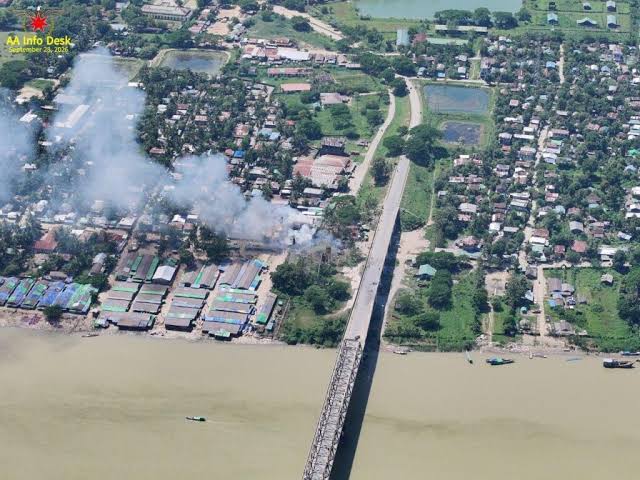
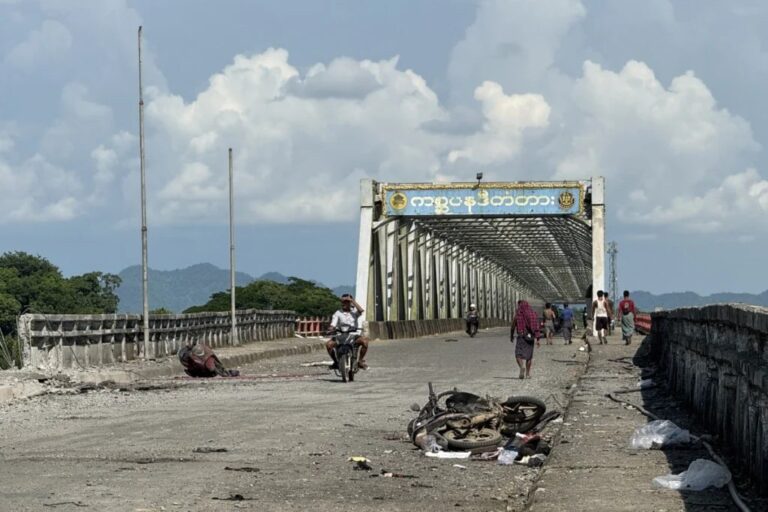
Human Rights Day: The Heartbreaking Sound of Bombs over Mrauk-U Hospital
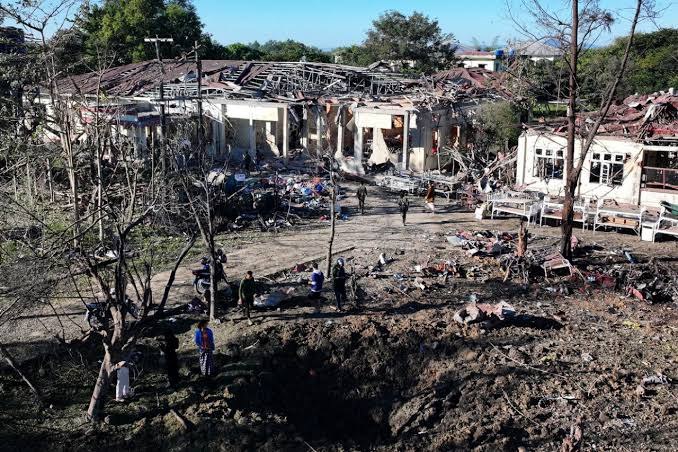
On the night of International Human Rights Day (December 10) a day designated globally to honor and protect the fundamental rights of every human being a shocking tragedy unfolded in Mrauk-U, the ancient cultural capital of Rakhine State.
Mrauk-U District General Hospital, a vital lifeline relied upon by local residents across 14 townships in Rakhine State controlled by Arakan Army (AA), suffered a devastating airstrike by the military council’s forces.
Shortly after 9:00 PM on December 10, two fighter jets bombed the hospital compound twice, with one bomb striking a patient ward directly.
The attack claimed the lives of 33 people, including innocent civilians receiving treatment, a three-year-old child, maternity patients, and young Rohingya women. Additionally, 76 people were injured, 27 of whom sustained critical injuries and remain in life-threatening condition.
Violation of International Law and Humanitarian Standards
Under international humanitarian law (the Geneva Conventions), hospitals, schools, and religious buildings are protected civilian sites immune from attack under any circumstances. However, the coup military disregarded these rules and deliberately targeted a hospital sheltering patients and healthcare workers.
What makes this even more tragic is that it occurred on the very same day military generals in Naypyidaw were holding an “International Human Rights Day Ceremony” and a “Counter-Terrorism Meeting.”
Speaking superficially about human rights on one hand while bombing and killing patients in their hospital beds on the ground is a blatant war crime.
According to records from the AA’s Humanitarian and Development Coordination Office (HDCO), 970 civilians were killed and 2,054 were injured in Rakhine State due to military attacks between November 2023 and the end of September 2025.
International Concern and the Need for Concrete Action
On December 10 the very day of the bombing Yangon-based embassies, including those of the UK, Australia, and Canada, issued statements urging the military to halt its airstrikes and human rights violations. Yet, mere words and statements have failed to save lives on the ground.
The body of a three-year-old child pulled from the rubble of Mrauk-U Hospital and the blood-stained patient wards stand as grim testimony to the daily hell endured by the people of Myanmar. The time has come for the international community to swiftly implement concrete measures such as aviation fuel sanctions and comprehensive arms embargoes to effectively deter the military council’s aerial assaults.